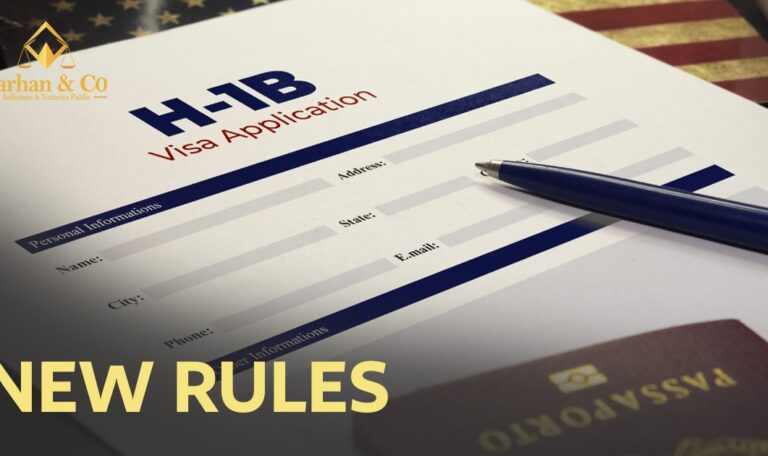
The United States has introduced important changes to the H-1B visa programme from April 2026. The updates introduce new procedures that organisations must follow to prepare their applications and submit them, and complete their assessment process. The new rules establish different criteria for candidate selection to gain authorised status. The H-1B visa remains one of the main routes for skilled professionals to work in the United States. The process has widespread applications across technology, engineering, finance, and healthcare. The process has maintained its competitive edge due to the high demand for our services. The new rules establish a procedure that combines structured elements with selective components for the assessment process. The UK workforce needs to understand these changes because they affect both their employment rights and their responsibilities without exception. The United States application process requires candidates to start their preparations early, while employers need to begin all their sponsorship activities early. A clear and compliant application can reduce delays and improve approval chances. Changes to the H-1B Application Process The H-1B application process has been updated to improve accuracy and reduce incomplete or incorrect submissions. Authorities now require more detailed and structured information from applicants and employers. The latest version of Form I-129 must be used for all applications. Applications submitted on outdated forms will be rejected automatically. Job roles must be clearly defined with duties and responsibilities. Applicants must provide details of their field of study. Academic qualifications must be supported with official evidence. Supporting documents must be complete, accurate, and consistent. The changes will help decrease errors while allowing only qualified applications to proceed. The process will reject applications because even minor errors or missing information will trigger automatic rejections. The applicants need to examine all of their documents in detail before they submit them. Shift from Lottery to Merit-Based Selection The most important modification involves discontinuing the traditional lottery system. The new system selects applicants who demonstrate both their qualifications and their economic value to the organisation. The selection process now uses weighted criteria instead of random lottery selection. The system gives priority to applicants who demonstrate advanced skills. The application receives a boost from relevant work experience. The selection process favours candidates who possess specialised skills in high-demand positions. Candidates with strong professional backgrounds have better chances of getting their applications approved. The selection process now depends on established criteria instead of random selection methods. Applicants must prove their worth through their educational background, professional expertise, and work history. The United States workforce will use this method to attract top talent from around the world. Increased Focus on Salary Thresholds Salary has become a central factor in the updated H-1B selection process. The authorities need to establish fair payment standards for foreign workers, which should not impact local wage rates. Selection chances increase when candidates receive higher salary offers. The minimum salary thresholds will show expected growth. Entry-level positions will face increased examination from authorities. Wages must reflect the true market rate for the role. Candidates who receive lower salary offers will face decreased chances of obtaining approval. Although exact salary thresholds have not been officially confirmed, it is expected that they will align with higher wage levels. This may create challenges for early-career professionals or roles with lower salary ranges. Applicants should carefully review salary expectations before applying. Employer Responsibilities and Compliance Employers play a critical role in the H-1B visa application process, and the new DOL regulations increase the amount of compliance and transparency that employers must meet regarding their H-1B visa applications. This means that employers now have an increased level of responsibility to ensure that they are complying with these regulations. Employers are now required to provide the following: Evidence of prevailing market wage rates for the position Verifiable specialized knowledge/skill(s) for the job Justification for the hiring of a foreign worker Accurate and verifiable documentation Consequences of Non-compliance – the employer’s application for an H-1B visa may be delayed, denied, or penalized due to their failure to comply. The above requirements have been put in place to protect the US labour market and prevent employers from abusing the H-1B visa program. Employers must double-check that they are following all applicable laws in the hiring process of each candidate who applies for an H-1B visa. Wider Immigration Policy Context The H-1B visa reform is one aspect of the US government’s overall plan to reform US immigration policy through control, fairness, and economic value. Specifically: 1. There has been an increase in visa application fees in recent years. 2. There has been a significant increase in the cost of employer sponsorship. 3. Certain cases may incur additional costs. 4. Applications for H-1B visas are now subject to more rigorous review. 5. There has been a much tighter enforcement of eligibility requirements and criteria. These changes should help to eliminate waste and encourage the issuance of H-1B visas to individuals who have demonstrated economic benefit and will enhance productivity in the US economy. Therefore, H-1B visa applications will now undergo a more thorough review and be more thoroughly considered on a case-by-case basis to help provide a fairer and more competitive process for H-1B visa applicants. What This Means for UK Applicants UK applicants need to give more thought than ever before now that the new regulations are in place. A prepared and complete application can create significant differences. The need for accuracy and completeness Employment opportunities based on pay will increase approval Strong qualifications and related history required Application errors or lost documents may delay or deny your application Plan to avoid delays and issues Before starting your application, research what you will need to prepare, and prepare all your documents before you submit. If you rush or do not fully complete an application, you run a high risk of being denied with the new system. Practical Steps for a Strong Application The visa application process requires applicants to follow a systematic process for their H-1B visa application preparation. The latest..